

Authored by @_exnihil0_
1 ) What Happened In 2025?
If there was ever a year that represents the volatility of crypto, it was 2025.
From an investment standpoint, it was a negative year. Asset prices were largely down, with altcoins (represented by TradingView’s OTHERS index) falling ~50% from their yearly high in aggregate. Despite the rise of DATs and institutional awareness, prices (except for a few coins like ZEC) failed to find sustained demand. The record liquidation event on October 10th represented a final KO for prices, taking with it any demand that was left.
Now that that’s out of the way, there are plenty of reasons to be extremely bullish on our industry! In fact, from a purely fundamental perspective, things have arguably never looked brighter. Regulators are legitimizing stablecoins and the wider digital asset ecosystem. Tokenization is no longer just an idea – some of the world’s largest institutions are actually bringing assets onchain. Major global exchanges have expressed interest and intent to integrate blockchains and digital assets. The synergies between decentralized “sectors” like AI, robotics, and DePIN, as well as their advantages over centralized alternatives, have never been more obvious.
To get a full picture of the events that shaped 2025, be sure to look through our “2025 Crypto Wrapped” report here.
Ultimately, 2025 was a year of fundamental progress, and perhaps the largest we’ve ever seen. When we look back, it will be remembered as a pivotal year that laid the building blocks for the next wave of global technological disruption. In 2026, we expect significant developments to unfold: advancements in decentralized AI and its impact on robotics, further adoption by institutional finance, innovation around the utility and incentivization of digital assets, and much more.
Here are 10 ways that web3 will continue to thrive, and further distinguish itself from legacy tech and finance, in 2026:
2 ) RWA/DeFi
Thesis #1: Regulations will become increasingly clear and expand to new assets, fostering growth in tokenization across asset classes
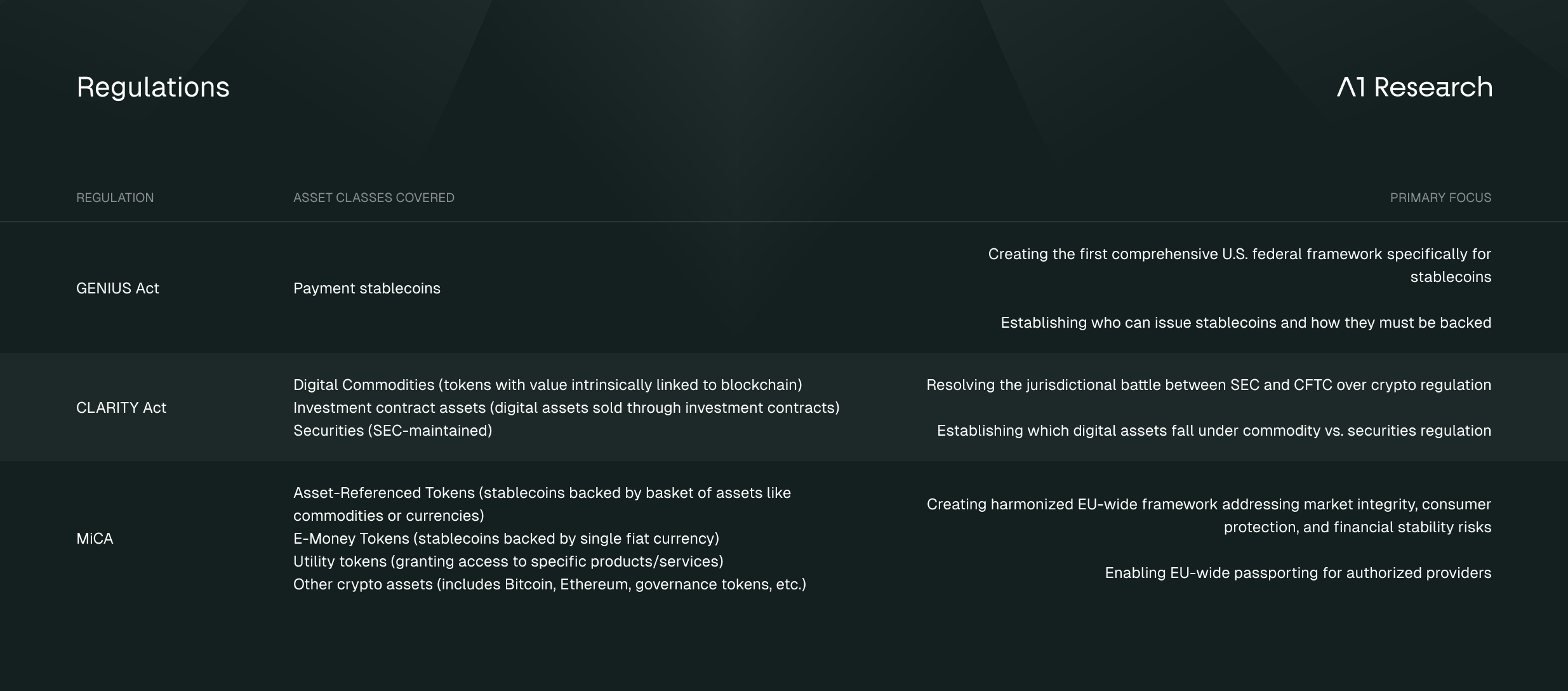
Over the past 12-18 months, creating clear regulatory frameworks for digital assets has been an increasingly large priority for many global regions; some prominent examples include the United States’ GENIUS Act and CLARITY Act, as well as the EU’s MiCA Regulation. So far, stablecoins have been the primary focus of regulators, but we’re now seeing an expansion into broader categories of digital assets and their related markets.
The international development of regulatory frameworks has enabled tokenization trends to accelerate substantially across several asset classes, which we believe will continue to grow substantially in 2026.
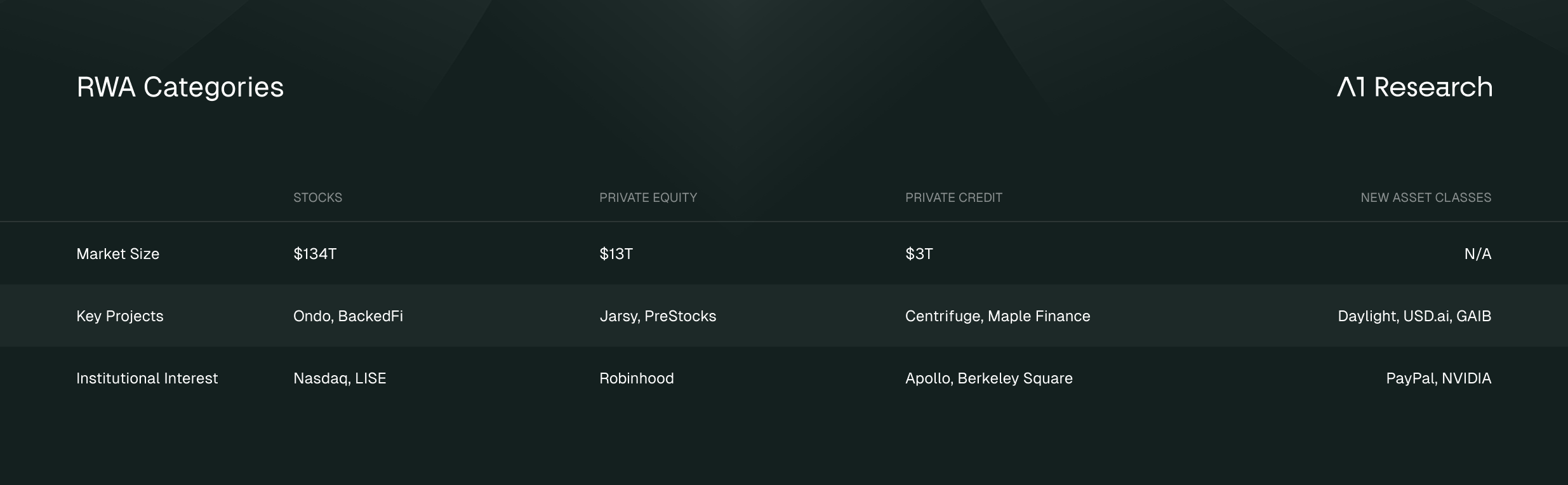
Stocks – $134T Market Cap
Tokenized stocks have recently been in the spotlight, drawing interest from major exchanges like the Nasdaq, as well as inspiring the creation of new ones such as France’s LISE exchange, built to specifically support tokenized shares. Additionally, the SEC continued to show their support for the Web3 industry by approving certain tokenized stock offerings, as well as closing investigations into tokenized share issuer Ondo Finance.
Currently, two platforms that stand out in the tokenized stock space are Ondo’s Global Markets and BackedFi’s xStocks, both of which launched during 2025. So far, their combined market cap of tokenized stocks is roughly $530M, but we believe this could easily achieve 10x growth in 2026.
Additionally, major CEXs (e.g. Kraken/BackedFi acquisition and Coinbase’s tokenized stock announcement) became interested in tokenized stocks, and Robinhood launched tokenized stock trading for EU users in June.
Private Equity – $13T Market Cap
The onchain migration of global equity isn’t reserved for public companies – it also creates unprecedented liquidity and availability for private equity. Specifically, platforms like Jarsy and PreStocks are offering widespread access to invest in private companies including Anthropic, OpenAI, SpaceX, and more (Robinhood is in the process of rolling out a similar product).
Private equity tokenization has clear benefits, namely greater availability and increased liquidity, which also leads to more efficient price discovery. However, it also provides additional forms of speculation on familiar brands that may be desirable to own for many individuals and asset managers alike.
Currently, private equity remains a niche faction of the broader universe of tokenized products, with a market cap of just ~$11M between Jarsy and PreStocks. And like its public counterpart, we believe the private equity market cap could easily increase by at least 10x in 2026 as existing platforms grow their user base and new platforms emerge.
Private Credit – $3T Market Cap
Another asset class set to benefit from increased liquidity and availability is private credit. Like private equity, the world of private credit has long been reserved for institutions and HNW individuals, while also frequently suffering from geographical barriers. While these markets have historically endured these severe inefficiencies, tokenization can provide vast improvements.
Despite its relatively small market cap, tokenization of private credit has a multi-year history. Since Centrifuge emerged as an early pioneer all the way back in 2020, nearly $20B of private credit has been tokenized onchain.
Currently, a majority of that $20B is available only to qualified investors. For example, Maple Finance, whose assets under management skyrocketed to ~$5B in 2025, keeps institutional-grade services separate from retail services.
However, one major trend that could open up access to the broader public is onchain credit scoring (we cover this in the next section). This would enable retail investors around the world to gain access to attractive yields while ensuring that counterparty risk is known and acceptable to all parties involved.
New Asset Classes
While traditional markets serve as familiar starting points for the coming wave of tokenization, the permissionless and programmable nature of blockchains is also being used to create entirely new asset classes.
Daylight Energy’s DayFi is turning electricity into a new asset class – while making the grid more efficient – by tokenizing revenues generated by its solar + storage installations. Additionally, anyone can build on top of the DayFi protocol, enabling further permissionless innovation around its decentralized and more efficient energy marketplace.
Projects like GAIB and USDai are bringing a new class of AI assets to the public by tokenizing data centers, GPUs, robotics hardware, and more. Not only does this allow more liquidity to fund frontier tech startups, but it also provides an alternative and potentially attractive source of yield for their DeFi-integrated stablecoins.
With legislation like the GENIUS/CLARITY acts and MiCA, we are entering a new period of alignment between regulators and digital assets. Already, we’ve seen a dramatic shift in sentiment from institutions, and they’re now more interested than ever to integrate with blockchain-based products. The magnitude of this shift will be one of the largest financial transitions in history, and as regulatory frameworks become clearer and expand to more (and completely new) asset classes in 2026, we expect this sentiment to turn into action.
Thesis #2: Onchain credit analysis will drive the next leg of institutional adoption
One of the most impactful products in DeFi’s short history has been permissionless money market protocols, where anyone can take out a loan using their crypto as collateral. While this is ideal for users who are seeking leverage (e.g. looping strategies) or want access to capital without selling their holdings, it’s not a scalable product at the institutional level. To truly be useful for financial institutions, the next generation of Web3 money market applications must offer undercollateralized lending.
The largest barrier thus far in implementing undercollateralized lending has been the lack of onchain credit scoring. Unlike overcollateralized lending, this requires identification of counterparties, as well as a detailed analysis of their credit history and current financial state to properly gauge counterparty risk, default risk, and more.
Considering that the young Web3 industry has its share of counterparty-related blemishes (FTX, Celsius, TAC, etc.), our community must establish a clear framework for establishing, measuring, and tracking creditworthiness of onchain accounts.
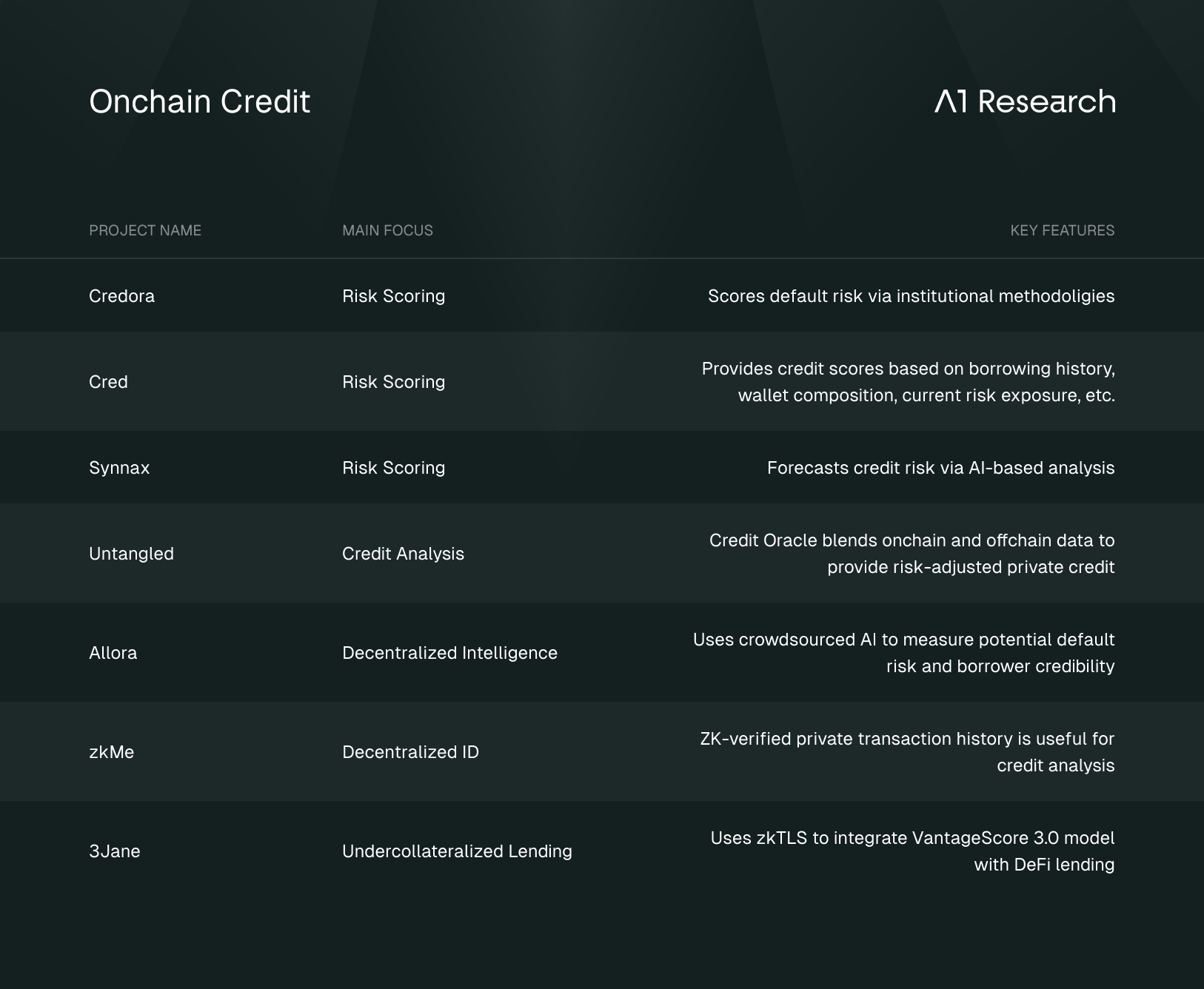
Currently, DeFi is breaking out of its “overcallateralized-only” infancy phase, and several methods are being used to model viable onchain credit scoring. These credit scores can be used to measure the default risk of any onchain entity (agent, individual, institution, etc.), enabling them to take out undercollateralized onchain loans with terms that match their credit profile. Some projects leading this developments are:
Credora
Recently acquired by oracle provider Redstone, Credora derives its default risk rating process from institutional finance methodologies to assign a risk score to onchain assets, borrowers, and products such as customized strategy vaults.
Cred
Cred specializes in providing credit scores for individual blockchain addresses using traditional factors such as borrowing history, wallet composition, current risk exposure, and more.
Synnax
Synnax provides current as well as forecasted Credit Signals for companies, merging traditional methods with predictive AI modeling that anyone can contribute to via Synnax Lab.
Untangled
Untangled’s Credio provides credit analysis through their specialized Credit Oracle, which tracks onchain and offchain data to bring risk-adjusted private credit to the RWA-based Untangled Pool.
Allora
While not strictly focused on credit scoring, Allora essentially functions as a crowdsourced, AI-based prediction platform, where anyone can submit AI models to solve specific problems with high degrees of accuracy – it’s currently being used by several DeFi projects to predict the odds that onchain loans will enter default, assess borrower credibility, and more.
zkMe
Like Allora, zkME is not strictly focused on credit scoring – however, their private, decentralized IDs are useful for proving onchain transaction history (a key factor for creditworthiness) without exposing any details.
3Jane
One of the first projects to bring undercollateralized lending to DeFi, 3Jane uses zkTLS to integrate the widely-used VantageScore 3.0 credit scoring model to bring millions of comprehensive credit profiles onchain – this enables onchain loans based on offchain creditworthiness.
In 2026, we expect these ongoing developments to lead to the rise of undercollateralized onchain lending, which is a fundamental pillar of institutional finance. This will bring significant attention to the broader DeFi sector, highlighting decentralized money markets’ ability to facilitate programmable loans tailored to the exact needs and priced according to the exact risk profile (and forecasted profile) of the borrower – operations that can never be achieved using legacy systems.
Thesis #3: Continued stablecoin yield evolution
While simple hedging strategies such as the basis trade have been around for a long time, having access to their yields has typically been reserved for institutions and qualified investors. However, Ethena (as well as more recently-launched projects like Neutrl) have demonstrated that the programmability and composability of blockchains unlocks this yield for all users in stablecoin form.
We believe that demand for this emerging class of onchain assets will rise significantly in 2026 (and beyond) for two primary reasons.
First, lower interest rates will drive demand for alternative yield sources. Over the past couple years, major economies around the world have shown a steady and consistent trend of monetary easing. If this trend continues, alternative yield sources will become more attractive.
Currently, USDC and USDT dominate the stablecoin market; their combined ~$265B market cap accounts for roughly 85% of all outstanding stablecoin value. Not only are both of these assets backed by low-yield assets like US Treasury assets and other cash equivalents, but nearly all generated yield is kept by their distributor companies (Circle and Tether). If yields continue to fall, capital will search for more opportunistic yield sources, even if it means moving slightly up the risk curve. Ethena, Neutrl, and other stablecoin projects whose yields are not tied to the interest rates of “high-quality” assets such as government debt are well-positioned for a continuation of this trend in global rates.
Second, many “decentralized” stablecoins have very limited scalability due to the finite amount of digital assets backing them. As the world’s 3rd largest stablecoin, the most prominent example is Sky Protocol’s USDS, which is backed by a ~$12B portfolio of onchain assets (including other stablecoins). While there is certainly still opportunity for assets like USDS to scale, the limitation of available collateral and DeFi integrations, as well as any emerging competition, will inevitably limit their growth.
Alternatively, assets like Ethena’s USDe and Neutrl’s NUSD achieve a lower barrier to scalability due to their flexibility and use of derivatives, which can theoretically scale far beyond the supply of underlying assets. In fact, the scalability of the basis trade is well-known in the institutional space; it’s currently a ~$800B market.
Ultimately, the basis trade is one of many yield-generating strategies that could theoretically generate yield for current and future stablecoins. Options present another yield source that’s been largely untapped in the web3 space, and a rise in demand for onchain yield could finally spark the necessary demand to achieve product-market fit.
While strategies like the basis trade are hedged by definition, its yield source (particularly in web3) can be extremely volatile during periods of systemic market volatility, such as the infamous 10/10 liquidation cascade. Option spreads, on the other hand, have known payout profiles, eliminating potential vulnerabilities inherent in hedged strategies.
Overall, we expect to see innovation around providing competitive and reliable stablecoin yields that outperform the current Treasury-backed stablecoins, while achieving greater scalability than token-backed stablecoins.
3 ) Prediction Markets
Thesis #1: Parlays will push widespread adoption of prediction markets
The 2024 election cycle propelled prediction markets into the mainstream spotlight, and they’ve since rapidly become one of web3’s most popular use cases. This is evident by soaring notional volume on leading prediction markets:
- Before October 2024: $3.8B cumulative notional volume
- Since October 2024: $65.9B cumulative notional volume
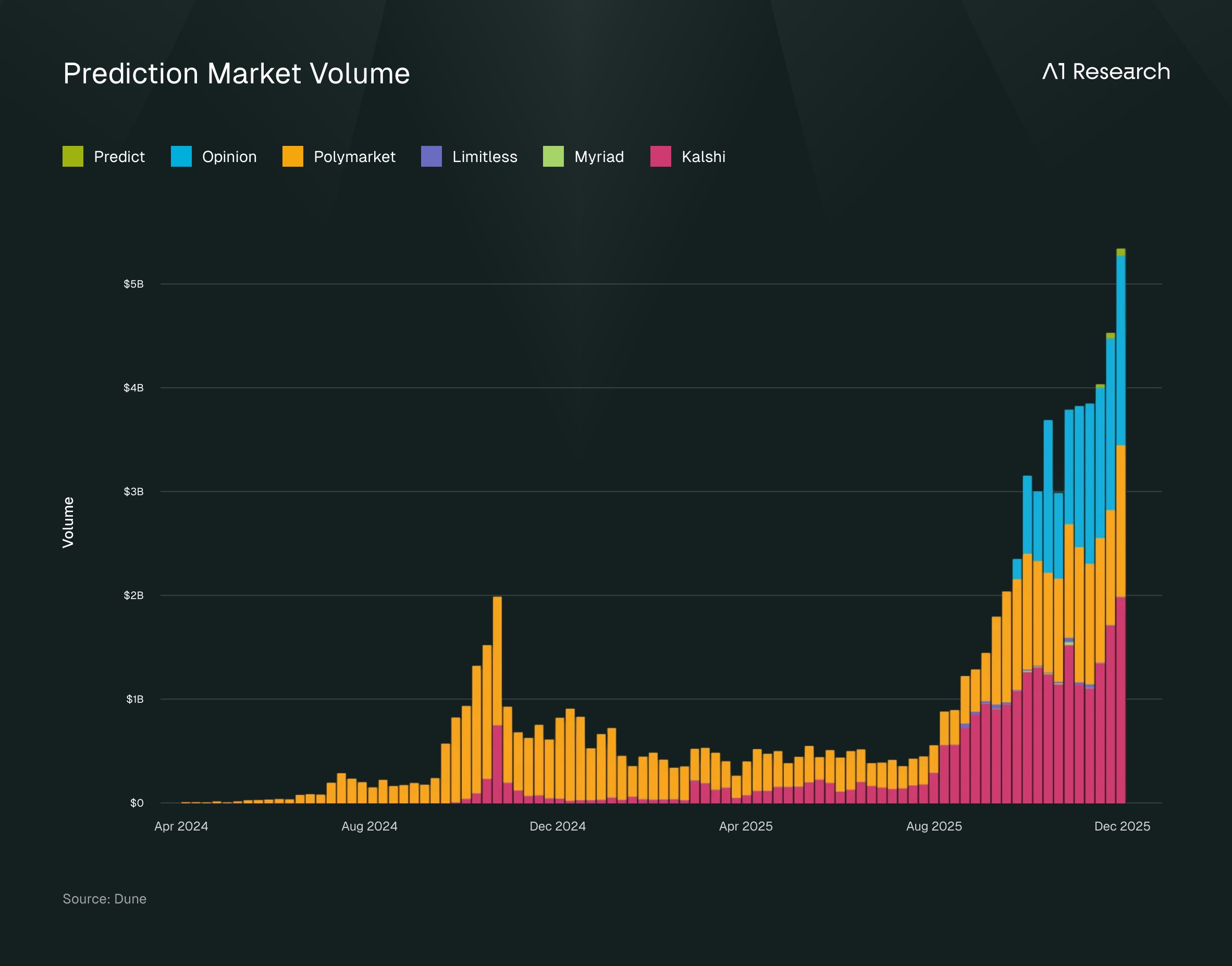
What makes this even more impressive is that the notional volume over the past ~14 months is roughly 44% of the entire US Sportsbook handle (~$150B). However, onchain prediction markets will far exceed US Sportsbooks in terms of volume (possible even in 2026). That’s because blockchains are the perfect platform to host parlay bets; their permissionlessness nature allows users to create a theoretically infinite number of markets, extending far beyond sports. In fact, Polymarket has generated $6.5B in notional volume in non-sports categories during Q4 alone.
While the growth so far has been impressive, we believe that the next major catalyst for prediction markets is the introduction of parlay bets, where users can bet on multiple events happening to win compounded payouts.
In the sportsbook world, not only are parlays the ultimate revenue generator – but people love making them, too. Here are some quick stats on US Sportsbook parlay activity:
- In 2025, 20% of U.S. adults placed a sports bet, up from 12% in 2023
- They spend an average of $3,284 annually
- Over 80% of wagers happen on mobile
- Parlay share of total handle has grown from ~20% to 35% over the past 5 years
- ~60% of revenues for US sportsbooks Fanduel/DraftKings come from parlay bets
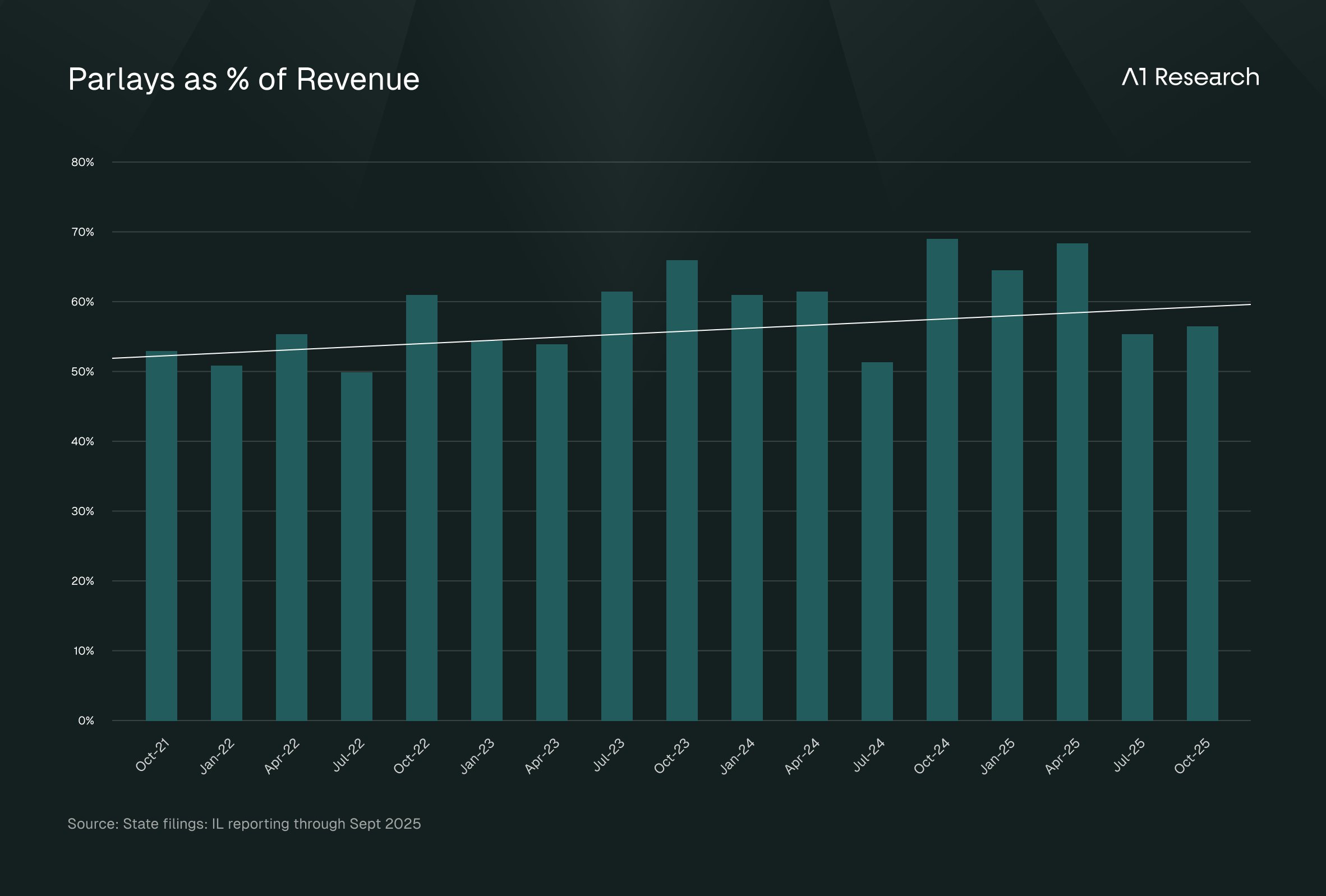
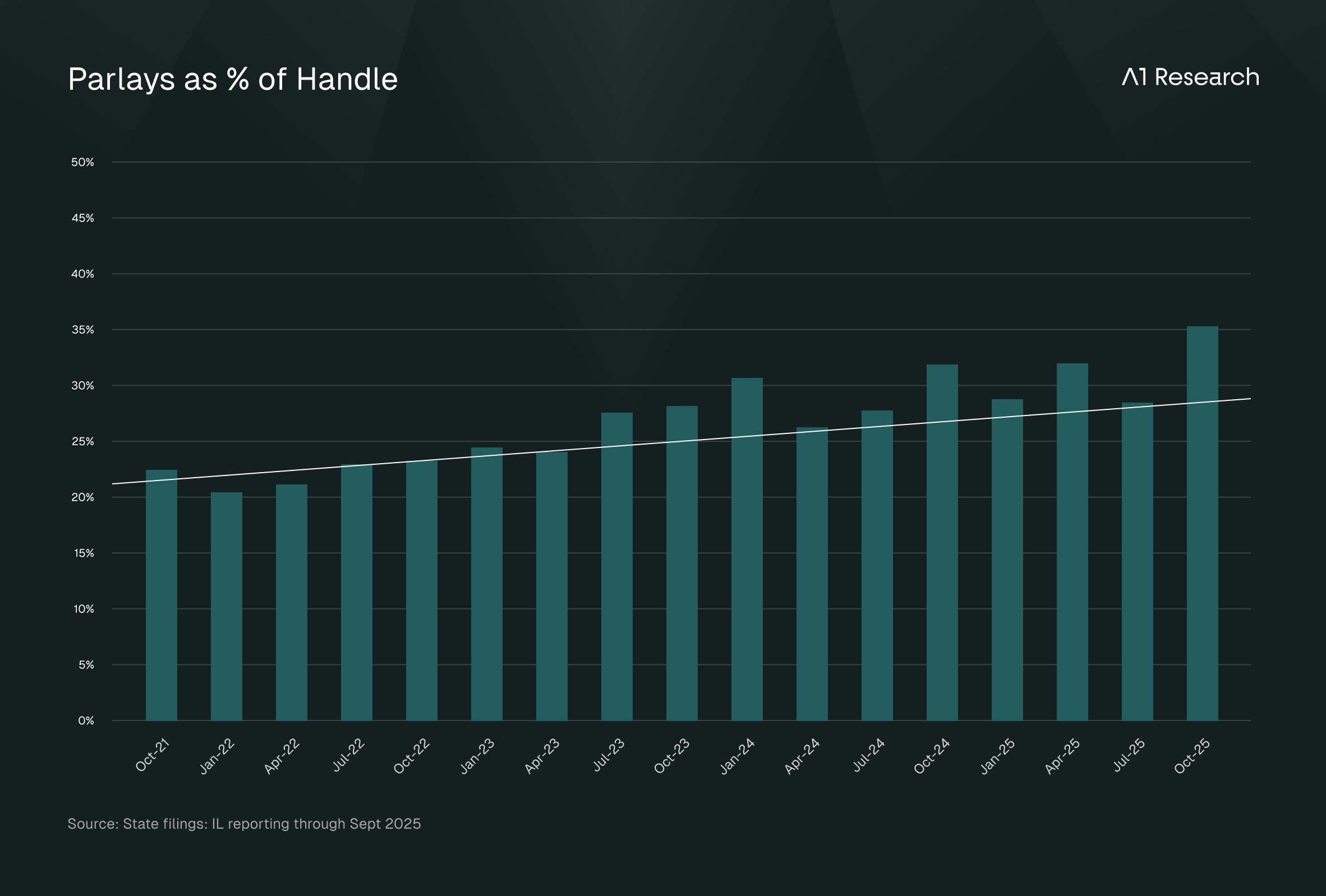
While parlays are typically associated with sports betting, opening them up to the wide variety of topics brings about several major advantages.
In permissionless prediction markets, anyone would theoretically be able to bet on any combination of events – all in the same app. In theory, this means infinite payout opportunities, and infinite precision when choosing outcomes.
A typical simple strategy for parlay bets is to stack similar bets that project the same outcome (e.g. player X scores 2 goals and their team wins by 2 or more). But in permissionless markets, you can shape a similar parlay around macro/geopolitical/policy events that all trend towards the same outcome, while also betting on the outcome itself. For example, you could parlay bets on:
- Expansionary stablecoin regulation passing by X date
- USDC supply goes to $X by X date
- CRCL stock goes to $X by X date
Recently, Kalshi became the first prediction market app to enable parlays via Kalshi Combos. Essentially, this allows anyone to submit a request to make a parlay bet, which can be accepted by anyone willing to take the other side.
While Kalshi isn’t a blockchain-based app, the core theme of permissionless parlays holds true with Combos. This feature creates a powerful unlock for users; not only can anyone build their own specialized parlay spanning multiple topics, but anyone else can choose to take the other side of the bet as well. This structure creates the potential for efficient, community-based price discovery.
The idea for onchain prediction markets is the same: open markets where anyone can create an odds-based market for (theoretically) any event or series of events. However, the opportunity for projects to capitalize on this remains wide open, with no clear leader yet.
Polymarket, the overall leader in prediction markets, offers a limited version of parlays which are curated by the platform. While these demonstrate the potential for prediction market parlays, the curation process severely limits their potential.
Hyperliquid presents another promising option for onchain prediction parlays with the recent HIP-4 “Event Futures” proposal. This proposal outlines a similar structure to Kalshi, where users can broadcast their own custom parlays to all users, and anyone can take the other side of the bet.
With ~$2B in TVL, the Hyperliquid ecosystem has a major advantage in terms of liquidity, which increases the likelihood of establishing efficient price discovery (and finding a counterparty for your parlay request). And with its wide assortment of DeFi products, counterparties (i.e. market makers) would have a wide selection of available hedges to protect their downside; in fact, they could even create their own hedge via HIP-3.
Ultimately, 2024-2025 represents the widespread “0 to 1 moment” for prediction markets, and we believe that parlays will have a profound effect on their adoption in 2026. The expected global handle of ~$344B for sportsbooks in 2026 could serve as a benchmark for prediction market notional volume (although not a perfect benchmark, as prediction markets offer more than sports). And considering Q4 notional volume is over $34B, it’s surely not out of reach.
4 ) Infrastructure
Thesis #1: Increased adoption of PETs (TEE, FHE, MPC, ZK)
As web3 integrates with and replaces legacy systems, a critical topic to address will be maintaining privacy. While the transparency of blockchains can indeed be a feature, in many cases it’s also a bug. Particularly, this is true for data held within professional industries like finance, AI, and healthcare, as well as personal identity and day-to-day transaction data.
The sudden shift in attention towards onchain privacy solutions in 2025 was made apparent through the significant price rally of ZEC, the native token of the Zcash blockchain, which uses zkSNARKs as an opt-in privacy mechanism to shield user transaction data. Another factor that contributed to this attention shift was the recent series of repeated outages by major internet infrastructure providers like AWS and Cloudflare, which reiterated the benefits of decentralized networks.
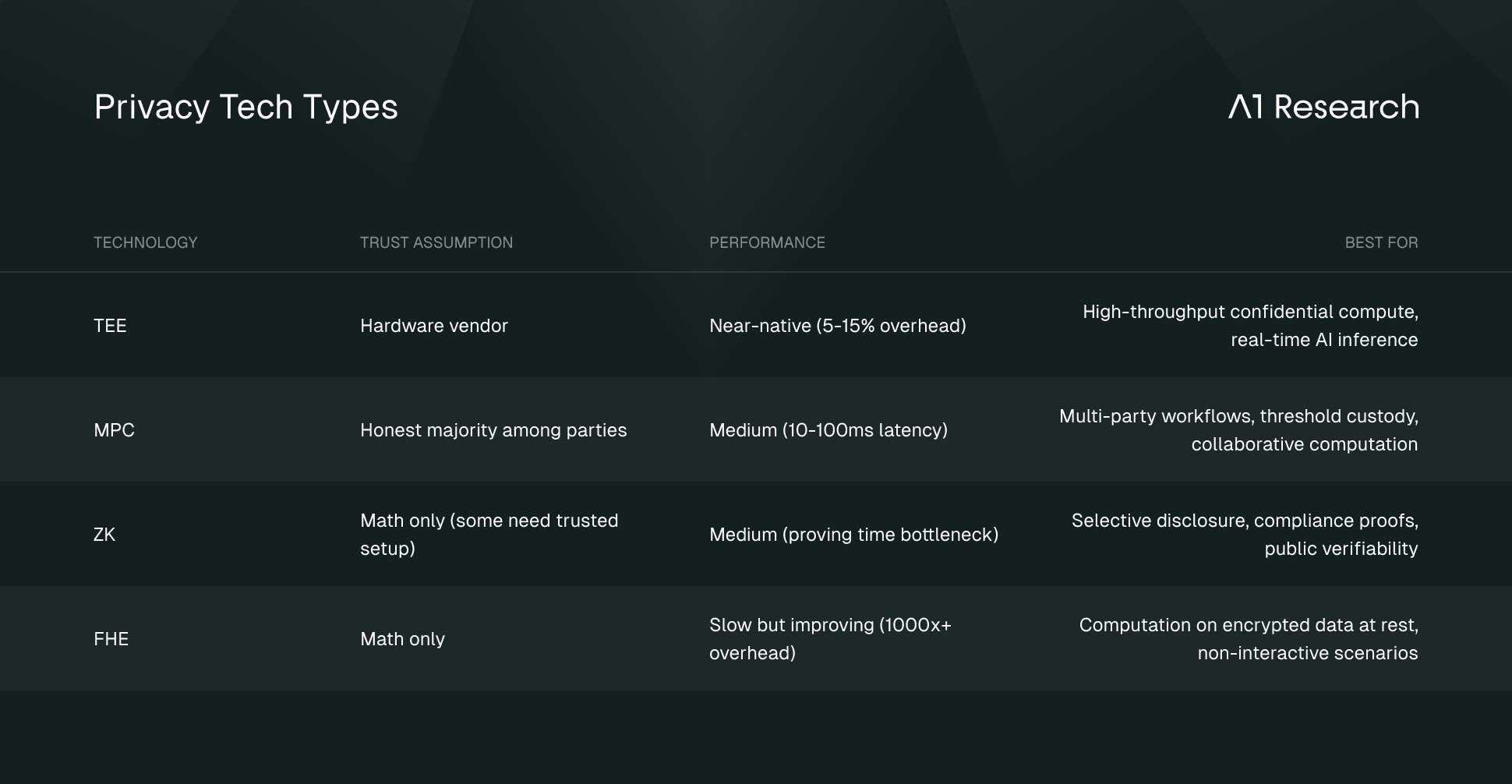
We believe that this series of events creates the perfect setup for greater adoption of PETs, or Privacy Enhancing Technologies, in 2026. When used within blockchain networks, PETs enable programmable privacy, which allows certain data to be completely hidden to a customizable range of parties. The current PET landscape is comprised of 4 technologies: TEE, FHE, MPC, and ZKP:
TEE (Trusted Execution Environment)
What is it?
TEEs are special locations within a CPU or GPU that enable privacy by shielding specific computations from all outside parties, including the host operating system. While their security relies on that of the hardware manufacturer (primarily Intel, AMD, and NVIDIA), they’re currently the most common PET used by web3 projects due to their low cost and fast throughput capability.
Who’s using it?
- Phala Network – 30,000 distributed TEE nodes
- Lit Protocol – secures over $400M via TEE-based wallet key management
- Nillion – nilAI offering runs LLMs inside of TEEs to protect data
FHE (Fully Homomorphic Encryption)
What is it?
FHE enables direct computation on encrypted data, completely bypassing the decryption stage, which allows data to never be exposed to any party. Additionally, FHE is based on quantum-resistant lattice cryptography, making it the “holy grail” of PETs. While it remains the most expensive and least performant PET, rapid progress is being made to enable “production-ready” FHE.
Who’s using it?
- Zama – the current leader in FHE with ~70% market share, performed the first confidential stablecoin transfer on Ethereum after their recent mainnet launch
- Sunscreen – SPF (secure processing framework) brings FHE to any web2 or web3 app
- Privasea – protecting 800k+ verified human IDs via FHE
- Mind Network – bringing FHE to onchain agents via x402z
MPC (Multi-Party Computation)
What is it?
MPC allows multiple parties to perform computations while only having access to a portion of the data. Data is split into encrypted "shares" using secret sharing schemes (e.g. Shamir's Secret Sharing) so no single party holds the complete secret. While MPC is currently trailing TEE in terms of performance, it’s another viable alternative for onchain privacy. With its first commercial implementation in 2008 (at a Danish sugar beet auction), MPC technology is one of the most battle-tested PETs in live scenarios.
Who’s using it?
- Arcium – specializes in parallelized enterprise compute, recently accepted into NVIDIA’s Inception program
- Nillion – nilDB offering enables data to be stored in a decentralized, secure way via MPC
- Lit Protocol – in addition to operating within a TEE, nodes ensure data security via TSS MPC
ZKPs (Zero Knowledge Proofs)
What is it?
ZKPs are able to prove something is true without revealing any of its underlying data. The two primary types of ZKPs are zk-SNARKs (used by Zcash – small proofs, require trusted setups) and zk-STARKs (larger proofs, no trusted setup, quantum-resistant). Viability of ZKPs from economic and performance perspectives has made major advancements in recent years, and blockchains are emerging as their first major use case. Recent developments have included aggregation techniques that can bundle thousands of proofs in a matter of seconds.
Who’s using it?
- Aztec – one of the first projects to implement ZKP-shielded transactions, their Co-CEO was a co-inventor of PLONK proofs, which are larger than zk-SNARKs but smaller than zk-STARKs
- Aleo – a ZK-native L1 blockchain that’s raised ~$300M
Namada – offers multichain privacy via their ZK-based Unified Shielded Set
Hybrid Solutions
To ensure maximally robust security, many projects are using hybrid PET solutions, combining multiple technologies to fit each one to its strongest use case. Examples of ideal hybrid solutions include:
- MPC + TEE – combines distributed trust (MPC) with hardware acceleration (TEE)
- ZKP + TEE – generate ZKPs from within TEE for verifiable confidential computing
- MPC + ZKP – combines interactive privacy (MPC) with public verifiability (ZKP)
- FHE + TEE – FHE keys are secured within TEE hardware, final decryption protected by hardware vault
- FHE + ZKP – verifiable (ZKP) computation on encrypted data (FHE)
PET Use Cases
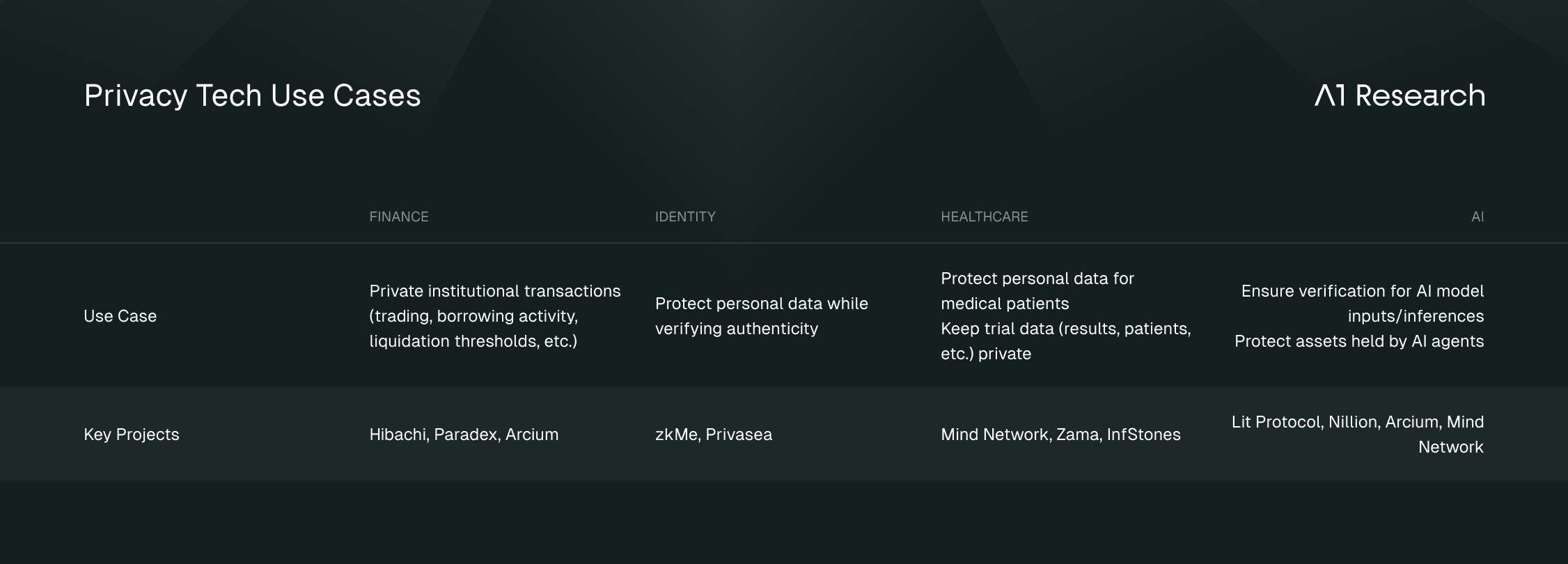
Looking ahead, the use cases for PETs are virtually infinite. Areas that have drawn the most attention so far, and that we believe will continue to do so in 2026, include finance, identity, healthcare, and AI.
Finance
As traditional finance becomes increasingly interested in DeFi and tokenized assets, a significant adoption blocker has been ensuring that transactions are hidden from public view.
For example, institutions cannot have borrowing activities, collateral types, or liquidation thresholds exposed. Privacy layers enable lending protocols where entire positions remain confidential.
From a trading perspective, institutions need to execute large trades without market impact or revealing positions. ZK-powered DEXs (e.g. Hibachi, Paradex) can use ZK-proven off-chain matching engines to provide CEX performance with complete privacy.
Identity
From an individual perspective, ensuring that online data regarding someone’s identity remains private is crucial. ZKPs have emerged as an early leader in solving this problem, and examples of how it can be used include:
- Prove attributes without revealing underlying data
- Prove you are over 18 without revealing birthdate
- Prove you are accredited without revealing net worth
FHE has also found traction in identity security. One of the leading projects in this area is Privasea, whose ImHuman app has used facial verification to secure over 250,000 accounts on Solana to counter the increasingly severe online bot problem.
Healthcare
FHE has also been used to protect the data of hospital patients, paving a future for HIPAA-compliant blockchain infrastructure. Additionally, FHE would be an ideal solution to secure vulnerable clinical trial data, such as patients and trial results. Projects such as Mind Network and Zama are leading the effort to bring PETs to healthcare via the World AI Health Hub.
AI
PETs have already found significant adoption within decentralized AI, as they’re a much-needed solution for the fundamental data access bottleneck. Some key unlocks enabled by PETs include:
- Private inference – run models on sensitive data without exposing inputs (e.g. Nillion’s nilAI)
- Collaborative training – with MPC, multiple organizations can train models on combined datasets without revealing proprietary data (e.g. Arcium’s XOR protocol)
- Private model weights – protect proprietary model architectures while still providing inference services
Several projects are also working on PET-agent integrations. For example, Lit Protocol uses TEE and MPC technology to enable AI agents to truly own and control assets via Programmable Key Pairs (PKPs). Additionally, MPC networks like Nillion and Arcium enable autonomous agents to transact with each other for data and computational services.
Overall, we believe that PETs represent the future of privacy. Rather than trusting centralized, opaque companies to handle data as promised, everything from transaction data to patient records to AI inference, and much more, will be fully verified by math and machines. 2026 will serve as a pivotal year in this development.
Thesis #2: The demand for verifiability will surge, and early-stage competition among ZK provers will look like the early days of BTC mining
One of the major benefits that onchain AI services have over their “Web2” counterparts is public verification. In fact, the current lack of AI verifiability is arguably the industry’s largest vulnerability; if you can’t prove output accuracy, not only does AI viability become questionable, but the inaccuracies can cause extremely detrimental second-order effects.
The most infamous weakness of current AI systems is the hallucination – when an AI produces (and even defends) verifiably false information. Some hallucinations are obvious, but problems arise when they seem factual and are perceived as truth. Unfortunately, the current leaders in AI development are all centralized, which means the procedures they use to train their models are kept secret. As a result, there’s no clear way to point out inaccuracies in their outputs.
Web3’s solution to this is the ZK proof, which can verify information without revealing anything other than its validity. While ZK proofs have been in development for decades, recent developments and performance breakthroughs from projects like Succinct, Boundless, Cysic, and many more, are finally turning the idea of ZK proofs into reality.
We believe that the rapidly expanding universe of decentralized AI will primarily use ZKPs to verify AI outputs/actions, ultimately making AI a major driver of future ZK utility. In order for this to occur, there must be a robust market of provers willing to contribute compute power to verify heavy loads of information.
Due to blockchains’ inherent permissionlessness and built-in incentivization mechanisms, there’s no more suitable network to host a global prover marketplace. Specifically, decentralized prover networks can crowdsource global bandwidth to create robust verification services, while incentivizing participation with economic rewards.
Some key projects contributing to the progression of ZK technology include:
- Succinct – offers SP1, an open-source zkVM that allows seamless integration of ZK proofs into existing blockchains for efficient verifiability
- Brevis – offers Pico, an open-source and highly-flexible zkVM similar to Succinct SP1, as well as a ZK coprocessor which allows smart contracts to “see” verified historical data
- Boundless – a ZK proof marketplace where anyone can become a prover by contributing compute power
- Giza – offers LuminAIR, an open-source zkML (zero-knowledge machine learning) framework to prove that AI models (such as the ones powering Giza agents) are running as intended
- Lagrange – offers several ZK products: DeepProve for high-speed inference verification (zkML), ZK Prover Network (similar to Boundless), and ZK coprocessor which enables smart contracts to function more efficiently by performing large computations offchain while verifying their accuracy by posting a ZK proof onchain
- Cysic – uniquely focused on both ZK-optimized hardware such as GPUs, ASICs, and portable miners, as well as an AI inference service which uses Cysic’s ZK hardware fleet for verification
With these projects serving as a diverse sample of ZK-related progress, 2025 marked the early-stage formation of the “prover industry.” We believe this nascent industry’s natural progression in 2026 will lead to early-stage competition among prover networks. It’s important to note that this doesn’t necessarily mean competition between networks; rather, we expect it to evolve in a similar fashion to the crypto mining industry.
Prover services and PoW mining are similar in that they’re both driven by community-generated compute power. Just as Bitcoin and Ethereum (during its PoW phase) weren’t “competitors” in the traditional sense for miners, neither will networks like Brevis and Succinct SP1.
Instead, the “real” competition will take place within each network and grow stronger over time. This scenario would play out similarly to Bitcoin mining. In its early years, miners were individual people solving hashes from their homes; but now, it’s almost impossible to successfully mine unless you have millions of dollars’ worth of equipment. In fact, Cysic is already preparing for this by developing ASICs designed specifically for ZK proof generation.
Overall, the ZK landscape became much more clear in 2024-2025 with the emergence of zkVMs like Succinct, prover networks like Boundless, AI-specific verification infrastructure like Giza, ZK coprocessors like Lagrange, and hardware providers like Cysic. All of these platforms play crucial roles in creating a robust ZK industry that creates demand for, and fosters healthy competition among, provers.
5) AI & Robotics
Thesis #1: Decentralized AI will take market share from centralized AI
Since LLMs went “mainstream” with the release of Chat-GPT 4 in March 2023, the world’s largest tech companies have dominated the AI space. Considering they have the most resources to capitalize on the industry’s rapid growth, high-profile companies such as Microsoft/OpenAI, NVIDIA, Meta, and Google were the natural first movers.
However, we believe that there’s a massive shift coming in the AI space, where the benefits unique to decentralized networks will begin to attract market share, starting in 2026.
The key factor that makes Web3 an effective platform to build AI services is its permissionlessness, which enables global crowdsourcing of data, compute, capital, and more. While it can be much faster to initially fund and provide data for a traditional, centralized AI system, decentralized and open networks can be exponentially more scalable. Here are some key reasons why:
- Anyone can contribute to the network from their personal devices whenever they want
- A geographically diverse set of (potentially millions of) nodes is far less likely to experience network-wide failure than a centralized platform (e.g. Cloudflare)
- The actions of a transparent, decentralized AI are public, trackable, and verifiable
- A truly decentralized network cannot engage in censorship or blacklisting
- Blockchains can reward participants for contributing value to the network, incentivizing global, sustained participation
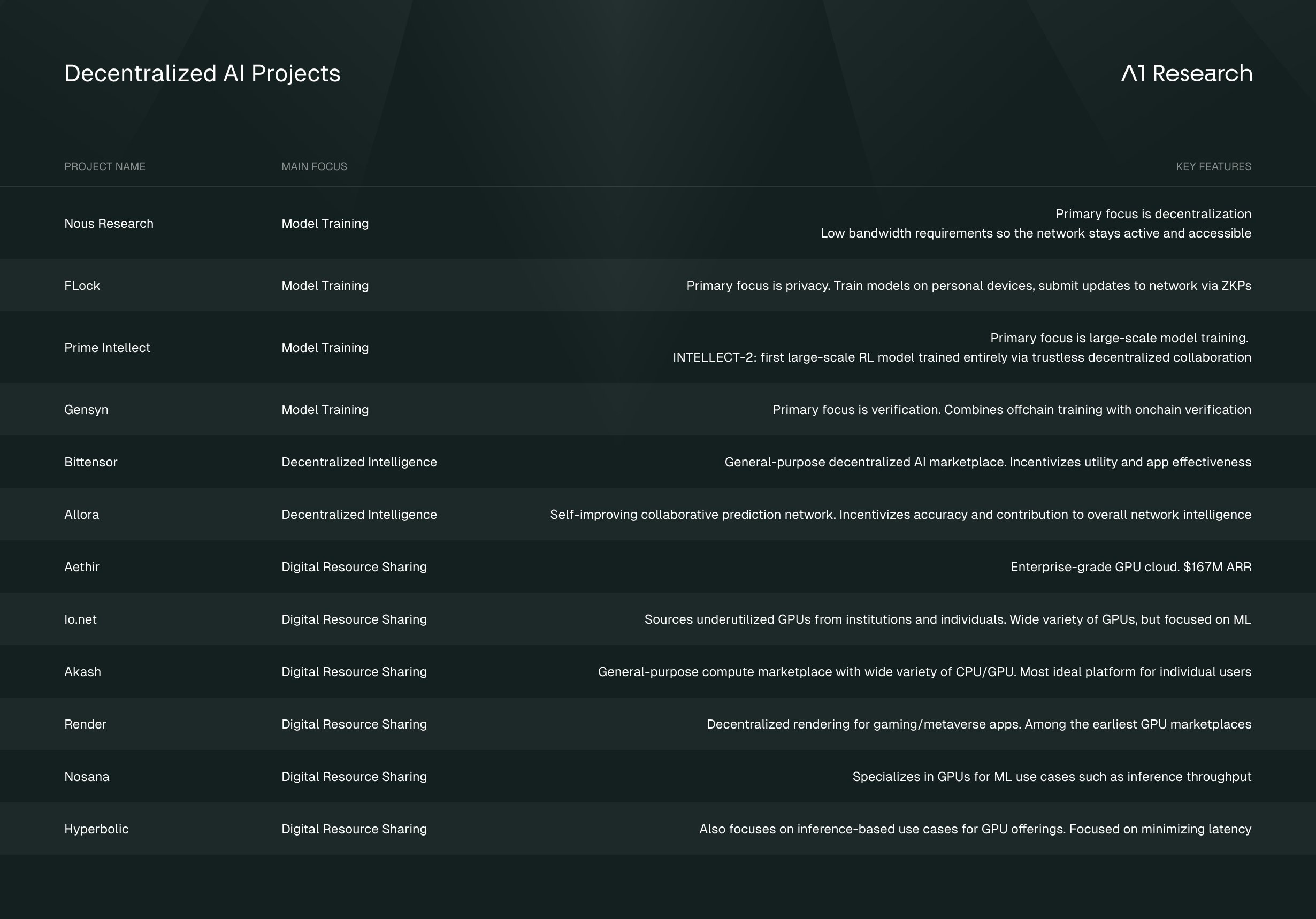
While there are currently many decentralized AI-related networks being built and adopted, some primary network types include model training, intelligence marketplaces, and resource sharing:
Model Training
Nous Research, FLock, Prime Intellect, Gensyn are some leaders within the model training category. While each of these projects has its own unique aspects, their broad aim is to provide a decentralized, open alternative to opaque, centralized models. By enabling transparent model training, inputs can be measured in terms of usefulness, and rewards can be distributed based on the quality of contributed data.
Intelligence Marketplaces
While the above projects are specifically focused on the model training process, networks such as Bittensor and Allora seek to crowdsource intelligence by incentivizing developers to build useful AI-based applications. Projects with better results receive greater token emissions, rewarding utility and performance.
Specifically, Allora focuses on self-improving prediction models while Bittensor is more of a general-purpose AI marketplace, but the idea is the same – crowdsource and incentivize innovation and resources from around the world to create a decentralized network of effective AI applications. These networks also create natural synergies with the model training networks listed above – for example, a model trained on Prime Intellect could be used to predict asset prices on Allora.
Resource Sharing Networks
While decentralizing processes such as model training and problem solving have clear advantages to centralized alternatives, it’s crucial that their power source also remains decentralized. This is where resource sharing networks – such as GPU aggregators – come into play.
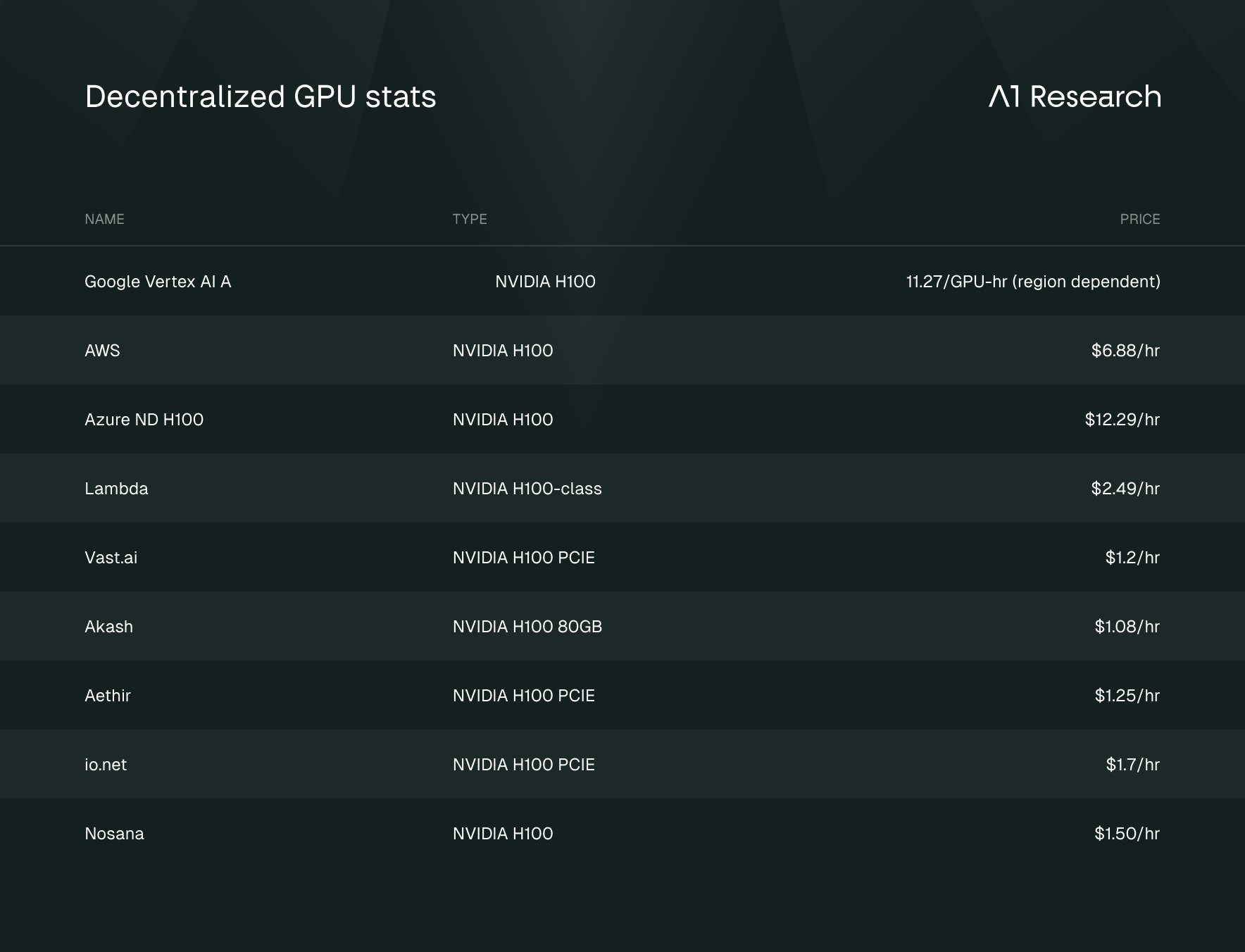
Centralized tech giants have seemingly infinite money to spend on the latest hardware to power their operations. However, studies have found that 50% or more of existing GPUs sit idle at any given time. Clearly, the current model leaves significant room for improvement from both economic and productivity standpoints.
This presents a major opportunity for decentralized resource marketplaces, where users can “rent” capacity of digital resources such as compute power for small tasks, large projects, and everything in between. Projects such as Aethir, Ionet, Akash, Render, Nosana, Hyperbolic, and many more are working to fill this need. From Aethir’s enterprise-focused services to Render’s focus on gaming/media to Akash’s wide selection of GPUs and CPUs, these projects cover the entire demand spectrum for AI and more. In addition to the inherent benefits of decentralization, they also significantly undercut traditional methods of accessing digital resources, with Ionet, Aethir, and Akash all saving users 50% or more vs. AWS.
Decentralized AI brings a completely new model that’s only possible on permissionless networks like blockchains, and this structure brings unprecedented potential for scalability – layering multiple layers including (but not limited to) model training, specialized intelligence applications, and digital resource availability – which cannot be matched by centralized companies.
Ultimately, these sectors of decentralized AI are a flywheel within themselves – more innovation in incentivized training networks drives demand for more digital resources, which brings more capacity and hardware selection to resource sharing networks, and so the cycle repeats.
It also promotes efficient resource distribution. Whereas many big tech companies are throwing as much money at AI-related tech as possible to out-compete one another, decentralized networks use permissionless incentives to attract effective users, builders, and contributors (e.g. high-accuracy prediction models receive more rewards) and desired resources (e.g. in-demand GPUs receive more utilization), which naturally directs capital to specific growth drivers.
As a result, we believe that the advantages that decentralized AI has over centralized AI (scalability, permissionlessness, incentivization, low-cost) will begin to be realized in 2026. Just as DEXs are increasingly taking market share from CEXs, decentralized AI will start a multi-year process of taking market share from centralized AI at an increasing rate.
Thesis #2: Robotics will drive major demand for precision geolocation services within DePIN
Another major trend to watch for 2026 is the continued innovation around and deployment of autonomous machines.
In order to have a functional machine-based economy, it’s crucial to ensure precision tracking of all devices at all times. While humans can look at a slightly inaccurate GPS and mentally account for the imperfections, robots and autonomous vehicles can’t. So, in order to have viable robot/machine coordination, they need to know exactly where they are from one other. Otherwise, you’ll have failed deliveries, broken home appliances, autonomous vehicle accidents, and much more.
While existing systems fall short of these requirements, there are currently many projects working on “machine-grade” geolocation infrastructure.
We expect robotics to have a similar demand effect for geolocation projects as the AI boom is having on decentralized GPU marketplaces. A notable example of this adoption is Aethir’s massive revenue growth; through the first 3 quarters of 2025, the project recorded over $100M in revenue for 2025 alone. Both of these services harness crowdsourced data from around the world via permissionless networks to contribute to the advancement of new technologies; while AI benefits from crowdsourced GPUs, the machine economy can benefit from crowdsourced geolocation services. Here are some projects working on various aspects of this emerging sector:
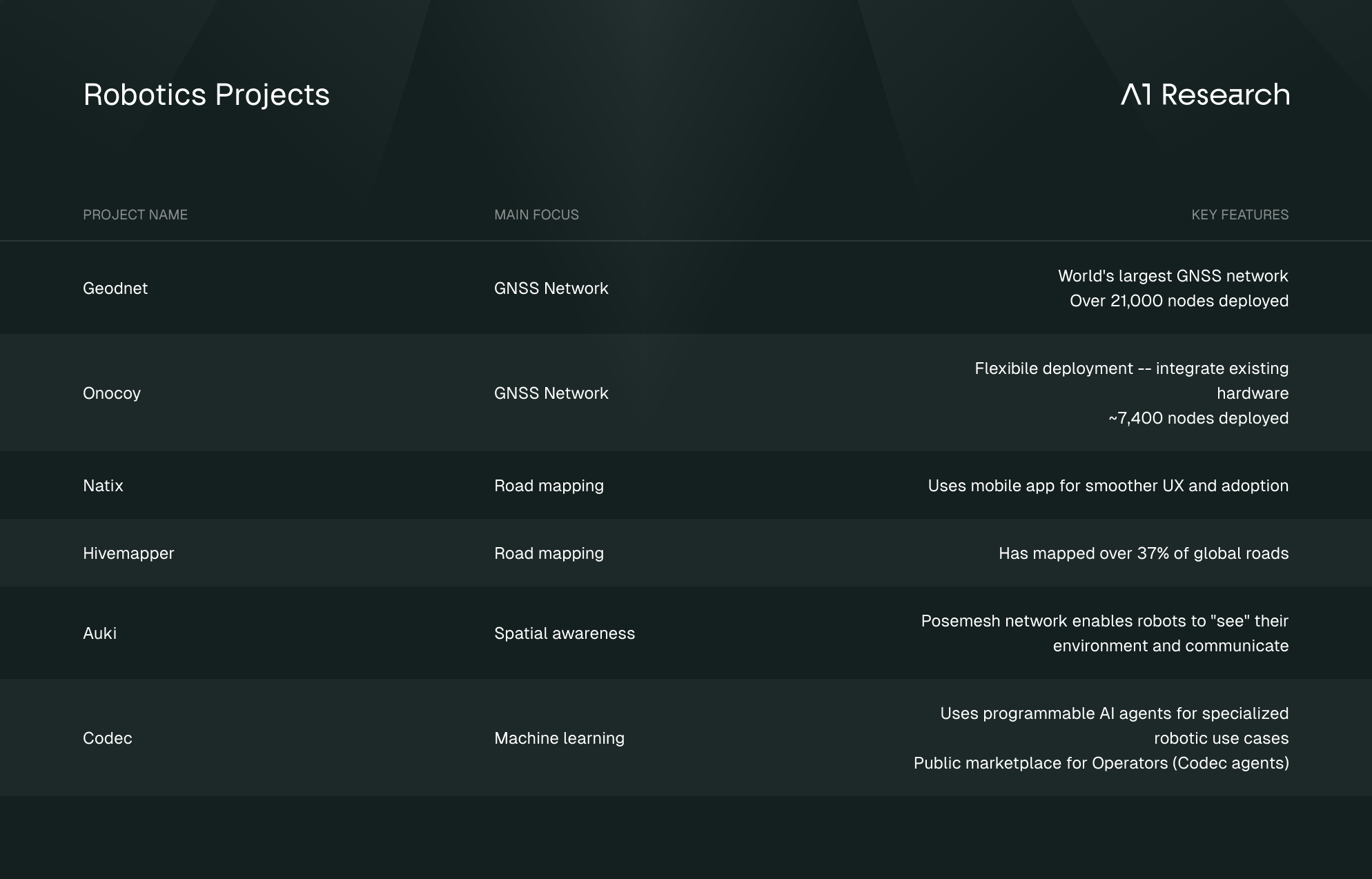
Geodnet and Onocoy provide precise data for geopositioning and environment. Specifically, they’re both community-powered, high-precision GNSS (Global Navigation Satellite System) networks. Despite only being founded in 2021, Geodnet is already the world’s largest GNSS network in the world with over 21,000 nodes deployed. While Onocoy’s network is smaller (~7,400 nodes), it offers the additional flexibility of using existing hardware to join the network (as opposed to Geodnet, which requires miners to use their specific hardware). Both of these projects aim to achieve millimeter-level positioning accuracy, far surpassing the meter-level positioning offered by traditional GPS services, ultimately serving as the positioning systems for autonomous machines.
Natix and Hivemapper are mapping the world’s roads via crowdsourced data from dashcams and mobile apps to serve as a real-time GPS for self-driving vehicles. Combined, they’ve mapped over 900M km around the world, and Hivemapper alone has mapped ~37% of global roads, highlighting the rapid distribution potential for decentralized networks. Combined with decentralized GNSS networks, these mapping services
Auki specializes in spatial awareness for machines, giving them a sense of their surroundings. While the above projects enable machines to know precisely where they are, Auki’s Posemesh network tells them about, and lets them interact with, their surroundings via positioning and 3D mapping features. Auki refers to this network as the “internet for robotics,” where robots can communicate with one another (e.g. share spatial data and compute resources) via a shared network. This naturally fosters collaboration, as the network grows with every bit of data consumed and shared by each connected machine.
Codec offers a framework for building VLA (vision-language-action) models, which gives robots the ability to sense their surroundings and use them to make rational decisions. This is done via Operators – AI agents that can teach robots (or any integrated machine) to perform certain actions. The flexibility of VLA models combined with programmable agents creates ideal infrastructure for robots, allowing them to train on specialized tasks for virtually any use case. Additionally, Codec’s permissionless platform includes a marketplace, where developers can monetize their Operators, creating a crowdsourced hub of collaboration and innovation.
Ultimately, we believe that the robotics industry will run on decentralized networks, as they’re perfectly suited for such a degree of global resource collaboration. The projects outlined above provide crucial infrastructure for robots to function effectively and be aware of their surroundings with precise detail, while allowing the global public to participate, collaborate, and earn incentives for doing so. Entering 2026, the connection between robotics and decentralized geolocation services has never been clearer, and we believe the two will begin to merge throughout the year.
Thesis #3: Stablecoins will evolve as agentic money
So far, “web3” has been used synonymously with “crypto.” However, this terminology has generally referred to a vague vision of a “future internet” rather than an actual, tangible product or experience.
The powerful combination of stablecoins and agentic networks could change that.
The development of web2 sparked a new age of content and communication. For the first time, people could create and interact with content in real-time.
Just as web2 made the internet dynamic, web3 will revolutionize how commerce is conducted. In essence, web3 enables a purely digital economy for the first time, using blockchains as the foundation. And in order to have a functional digital economy driven by digital actors, there needs to be digital money that moves at the speed of the internet.
While web2 transactions are digital, the money itself is not embedded into the internet, and it’s only spendable by people. Web2 payments seem to happen immediately, but typically take days to settle. However, a digital economy is made up of people and autonomous systems, which require near-instant settlement to function properly.
Stablecoins can fulfill this requirement by serving as a form of money that’s embedded into the internet’s infrastructure, making it accessible and usable by people and machines alike. But in order to have a functional digital economy driven by digital actors, there needs to be digital money. Stablecoins are the answer – and they will form the foundation for true “web3” commerce.
Unlike the digital representations of fiat currencies that the world currently uses, stablecoins are fully blockchain-native. As a result, they can be used hand-in-hand with onchain agents for real-time, customizable, permissionless transactions – made possible by the recent creation of the x402 payment standard. Additionally, blockchains’ composability allows agents to integrate with the evolving suite of onchain privacy solutions (which we also cover below) to ensure secure and private transactions.
This real-time payment streaming and settlement unlocks unprecedented primitives across multiple sectors, including:
- Financial – continuous payments of interest, dividends, management fees, etc.
- Consumer – fully-automated shopping (including payments) based on AI-driven insights
- Industrial – machine-to-machine (m2m) micropayment streaming for resources (e.g. data) as-needed
Ultimately, this combination of digital money (stablecoins) and digital actors (agents) will set “web3” completely apart from “web2” for the first time. Just as web2 brought real-time streaming of communication, web3 will bring real-time streaming of digital money – in the form of blockchain-based stablecoins.
6 ) Tokenomics
Thesis #1: The utility and ownership rights of altcoins will evolve
One of the unfortunate side effects of so many innovative and unique projects launching tokens in recent years is the fact that just about all of their tokens have experienced disappointing price action. While several notable projects achieved billion-dollar FDVs at their time of launch, most have seen their tokens drop 80% or more from their initial value.
As a result, tokenomics structures must fundamentally change. Historically, many teams have essentially used tokens (whether intentionally or unintentionally) as a loophole to typical equity funding. However, many altcoins can’t be valued in the same way as equities due to the lack of legally-enforced tokenholder rights. As a result, altcoins have largely been used for momentum-driven trading rather than long-term investment, and persistent dilution acts as a headwind with little to no persistent demand to act as an opposing force.
This repeated pattern makes it clear that projects can’t simply rely on hype or try to gain loyalty via incentivized campaigns to produce sustained demand for their tokens. In fact, projects will have no other option than to present communities with innovative and sustainable tokenomics structures, as people have (rightly) become more skeptical than ever when it comes to investing in new tokens.
In 2026, we expect to see significant improvements in how tokens accrue sustainable value, such as community vetting and revenue sharing.
Community Vetting
Another trend we expect to strengthen is the prioritization of community/public allocation. To put it bluntly, people are tired of being dumped on by VCs, teams, investors, and other types of insiders. As a result, people are doing more DD around tokenomics to measure the “rugging potential” for new tokens.
Recently, this increased attention has resulted in better pre-TGE vetting of token holders via new generation of ICO platforms such as Legion, Echo/Sonar, MetaDAO, Buidlpad, and Kaito Capital. While each of these platforms have unique vetting methods, they share a common goal: maximize alignment between tokenholders and the project/team. In other words, they aim to ensure that tokens are allocated to “quality” holders who are aligned with the project, rather than “mercenary” capital and sybil/bot “users.”
Of the projects listed above, MetaDAO is directly addressing the aforementioned lack of tokenholder rights (a major disadvantage to other financial assets like stocks and bonds). Specifically, MetaDAO’s “Ownership Coins” draw inspiration from the futarchy model to unify economic, legal, and governance rights for holders.
Ultimately, favorable community allocations serve as the foundation of sustainable tokenomics. If the tokens go to the right people, further rewards such as revenue share and token buybacks can multiply the sustainability of a tokenomics structure.
Revenue Share
One of the few projects that’s managed to prevent the infamous post-TGE crash is Hyperliquid, and one of the primary mechanisms they’ve used to accomplish this is the combination of revenue sharing and token buybacks. Almost all revenue generated by the protocol is directly used to buy back HYPE tokens, which is essentially a form of revenue sharing. This strategy has created a strong source of demand for HYPE – as of October, Hyperliquid had directed over $644M to buybacks, accounting for 46% of all token buybacks. In other words, Hyperliquid is using almost as much money to buy their own token as everyone else in the industry combined.
Performing large buybacks can also be used as the foundation for future incentives, where bought-back tokens are “recycled” to reward participants rather than funding the rewards via new, inflationary tokens. We believe more projects will follow this model in 2026 and beyond, where anyone can contribute to the ecosystem’s success to directly benefit their investments, resulting in more innovation and activity.
Another form of revenue sharing is directly sending revenue to tokenholders. This is typically done for staked tokens, but it shouldn’t be confused for dilutive token farming; instead of “printing” new tokens to incentivize stakers, the staking yield is simply redistributed revenue earned by the protocol. The recent scrutiny around Aave also highlights the increased focus of tokenholder rights, particularly revenue distribution; when a project’s internal operators and investors hold a different class of assets than its DAO, there must be clear and tangible value in participating in the latter.
New Fundraising Methods
While efficient community allocation and revenue sharing are relatively straightforward concepts, we also expect an emergence of unique and innovative tokenomics frameworks – Flying Tulip is a great recent example of this.
The dual aim of Flying Tulip’s token model is to protect investors’ economic downside while prioritizing revenue generation over incentive models. While these priorities may seem intuitive, they’re the inverse of what many teams have done to-date – maximize short-term incentives while disregarding future potential revenue and the effects of rampant dilution. While the intricacies of the project itself are complex, its economic framework can be boiled down to two main points.
First, rather than spend raised funds (i.e. their $200M seed round) directly, this money will be used in various DeFi strategies to generate yield, and only the yield will be spent on operations as well as tokenholder-aligned activities such as buybacks.
Second, the community receives 100% of the initial token supply, along with perpetual put options. This directly protects investors’ downside, as put options increase in value when the underlying asset (in this case, the Flying Tulip token) decreases in value. As long as investors are holding the token, they can exercise their put option at any time.
Overall, the prioritization of tokenholders must become increasingly pervasive in our industry as it continues to mature. We expect to see a significant shift take place in 2026, where teams prioritize token demand via traditional methods such as revenue share and community vetting, along with new attempts at generating flywheels like Flying Tulip.
7 ) Wrapping Up
To summarize, we see an extremely bright future ahead for the Web3 space, with new innovations driving new use cases across many sectors.
In DeFi, we expect increasing regulatory support for digital assets, as well as further advancements in measuring onchain credit. These two developments would likely attract significantly more capital from institutions, both in the form of tokenized assets and credit. Additionally, the evolution of yield-bearing stablecoins will continue to merge the world of money with the world of passive yield.
In prediction markets, the introduction of parlay betting will create significant new adoption, bringing more users onchain via an easy, abstracted UX.
In infrastructure, we expect onchain privacy to thrive in 2026. As Web3 increases its enterprise userbase, privacy enhancing technologies (PETs) such as TEE, FHE, MPC, and ZK will become non-negotiable across areas such as DeFi, healthcare, AI, and more. In conjunction with this surge in awareness around privacy, we believe the marketplace for ZK proofs will begin to take form, resembling the early-stage competition seen in Bitcoin mining.
In AI, we believe that the inherent scalability and composability of open, crowdsourced networks and marketplaces will become a major advantage for decentralized AI projects; as a result, decentralized AI will begin to gradually take market share from their centralized counterparts. Robotics will also be an area to watch; we expect geolocation-focused DePIN projects to serve as a crowdsourced “eyes, ears, and mind” of robots, serving as a natural source of scalability. Additionally, as AI agents become more integrated within commerce and general online activity via standards like x402 and ACP, we believe stablecoins will thrive as an internet-native source of agentic money.
Finally, we believe the way that projects approaches tokenomics will shift substantially in 2026 as a reaction to the multitude of “failed” TGEs over the course of 2024-2025. We expect this trend to manifest as a combination of increased and more defined token ownership rights, more thorough community vetting to ensure tokenholders are aligned with the issuing project, greater emphasis on revenue sharing, and novel fundraising methods (such as Flying Tulip’s structure).
On the heels of a 2025 that saw major industry advancements in AI, tokenization, and more, 2026 is shaping up to be another significant year of fundamental developments, and we couldn’t be more excited to watch it unfold!
分享这篇研究
A1 Team · 宏观与市场
更多 A1 Research 内容
查看全部文章阅读: Front-Running the IPO: The $10 Trillion Pre-IPO Market Comes On Chain  宏观与市场
宏观与市场Front-Running the IPO: The $10 Trillion Pre-IPO Market Comes On Chain
OpenAI and Anthropic called the private share tokens "void." Yet they're still trading and the on-chain market priced Anthropic's $965B round before the term sheet was signed. The issuer veto is the filter.
 A1 Team阅读约 15 分钟
阅读: Greenland Tariffs and the Failure of the Digital Gold Thesis  宏观与市场
宏观与市场Greenland Tariffs and the Failure of the Digital Gold Thesis
On January 17, 2026, the Trump administration announced 10% tariffs on eight European nations, effective February 1, escalating to 25% by June 1 unless Denmark agrees to sell Greenland.
 A1 Team, Derek阅读约 20 分钟
阅读: Why the Venezuela Intervention Didn't Move Crypto  宏观与市场
宏观与市场Why the Venezuela Intervention Didn't Move Crypto
On January 3, 2026, the United States launched Operation Absolute Resolve, a military intervention in Venezuela that captured President Nicolás Maduro and his wife Cilia Flores. It was the most significant US…
A1 Team, Derek阅读约 7 分钟